

I still remember the night I gave up on takeout menus for good and started looking into homemade Chinese food recipes instead.
It was a Friday, I’d just ordered my “usual” from the Chinese place down the street, and when it arrived, something felt off. The sauce was gloopy, the veggies were mushy, and the bill was somehow $34 for two people. I sat there eating noodles out of a paper box thinking, I could probably make this better myself.
Turns out, I could. And so can you.
That one frustrating dinner is what sent me down the rabbit hole of homemade Chinese food recipes — and three years later, my kitchen has basically replaced my local takeout spot. Not because I hate restaurants, but because once you learn a handful of solid homemade Chinese food recipes, you realize you’ve been overpaying for underwhelming food this whole time.
This post is everything I wish someone had handed me on day one — 17 homemade Chinese food recipes that genuinely taste better than what shows up in a greasy paper bag, plus a few things I picked up along the way that made the whole habit stick.
Table of Contents
Why Takeout Stopped Making Sense
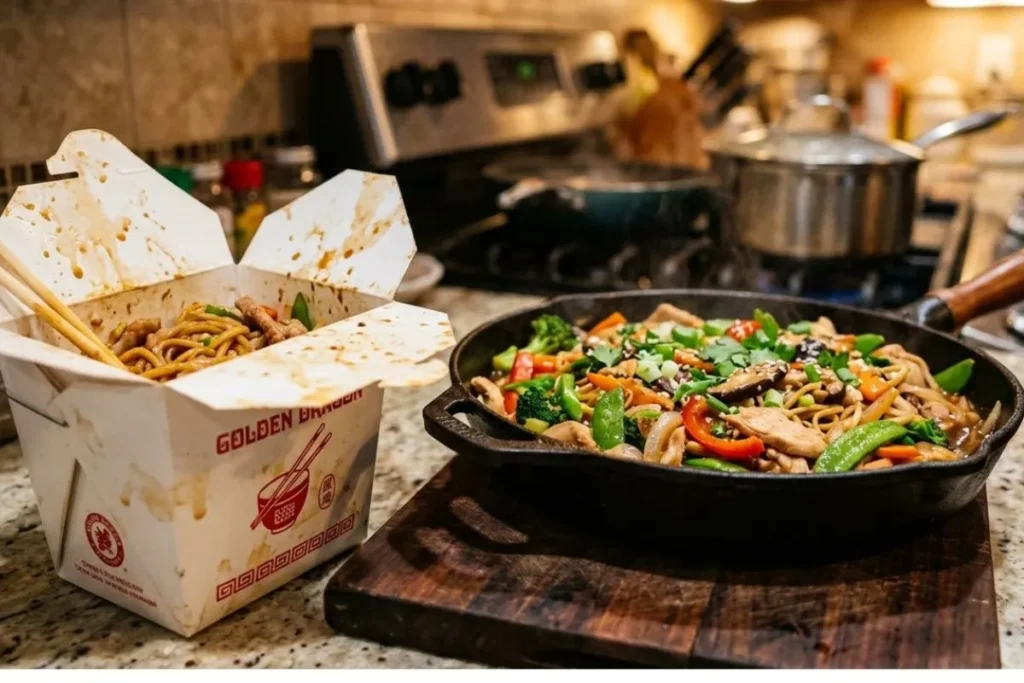
Let’s be honest about what usually happens with restaurant Chinese food. You order because you’re tired, it arrives lukewarm, half the dishes taste identical because they all use the same base sauce, and somehow you’re still hungry an hour later. It’s not really about the food — it’s about convenience. And convenience is expensive.
Here’s the part nobody tells you: most Chinese takeout dishes are built from about six core techniques and a handful of pantry staples. Once you understand those basics, homemade Chinese food recipes stop feeling like a “special occasion” project and start feeling like a normal Tuesday night dinner. Faster than delivery, cheaper by a mile, and you control exactly what goes in.
That’s the shift that changed everything for me. Not “I should cook more” guilt — just a practical realization that homemade Chinese food recipes are honestly easier than they look.
The Real Problem: Recipes Are Scattered Everywhere
Here’s where most people get stuck, though. It’s not the cooking that trips them up — it’s the chaos of trying to find the recipe again.
You save a recipe from Instagram. Screenshot a TikTok. Bookmark a blog post you’ll never find again. Scribble notes on the back of a receipt while your wok is smoking on the stove. Then three weeks later, you want to make that garlic sauce again and — nothing. It’s gone, buried somewhere in your camera roll between vacation photos and memes.
I lost my favorite orange chicken recipe this way. Twice. And honestly, that’s the biggest reason people give up on cooking Chinese food at home — not because the recipes are hard, but because they can’t hold onto the good ones long enough to make them a habit.
The Fix That Actually Worked For Me
Once I started actually writing things down in one place — ingredients, exact measurements, the little tweaks I made the second time around — everything clicked. My homemade Chinese food recipes stopped being one-time experiments and started becoming a real personal cookbook I could hand down or lean on for years.
That’s honestly the missing piece for most home cooks. You don’t need a fancy app or twelve browser tabs. You need one dedicated place to keep your homemade Chinese food recipes safe, organized, and easy to flip back through when you’re standing in the kitchen with wet hands and no time to scroll.
This is exactly why I started using a simple blank recipe journal —
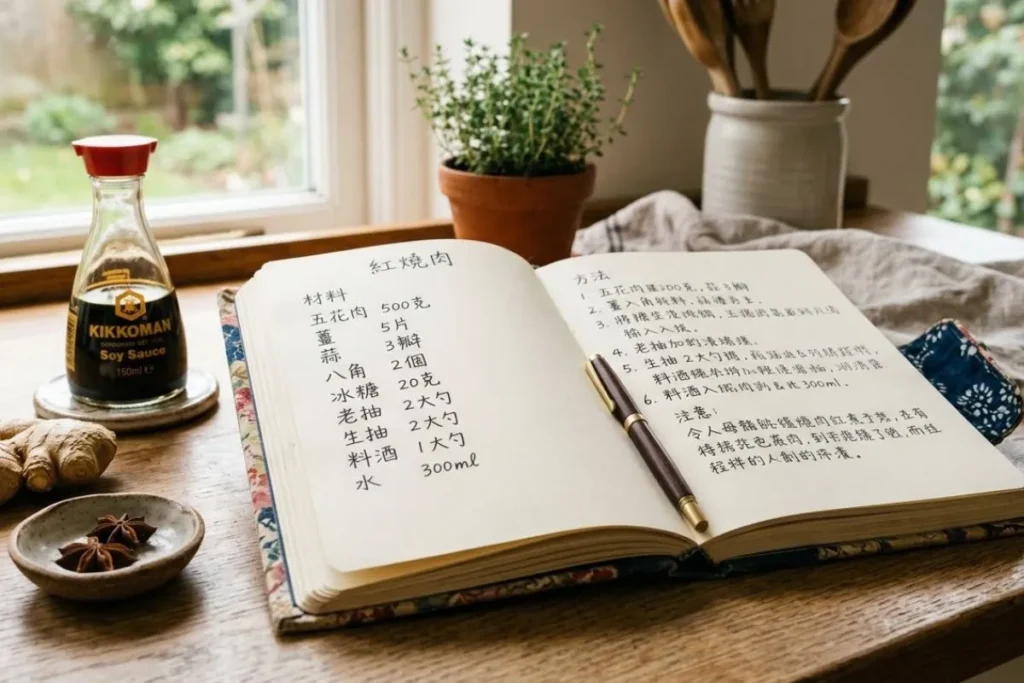
nothing complicated, just a hardcover book with room to write in your own recipes as you perfect them. If you’re building your own collection of homemade Chinese food recipes, having a proper place to record them is a small change that makes a huge difference. (I’ll link the one I personally use a little further down — it holds up to 140 recipes, which sounds like a lot until you realize how fast your collection grows.)
Real Benefits I Didn’t Expect
A few things surprised me once homemade Chinese food recipes became part of my regular rotation:
My grocery bill dropped. Soy sauce, garlic, ginger, cornstarch, and a few aromatics go a long way. One bottle of good oyster sauce lasts through dozens of meals.
I stopped guessing about ingredients. No mystery oils, no MSG bombs I can’t pronounce. When you cook homemade Chinese food recipes yourself, you know exactly what’s on the plate — which matters a lot if anyone in your house has allergies or dietary restrictions.
Meals got faster, not slower. Once you’ve made a stir-fry sauce a few times, it takes five minutes to throw together. Faster than waiting on a delivery driver, honestly.
Family dinners got more fun. There’s something about tossing noodles in a hot pan together that turns cooking into an event instead of a chore.
17 Homemade Chinese Food Recipes Worth Making Tonight
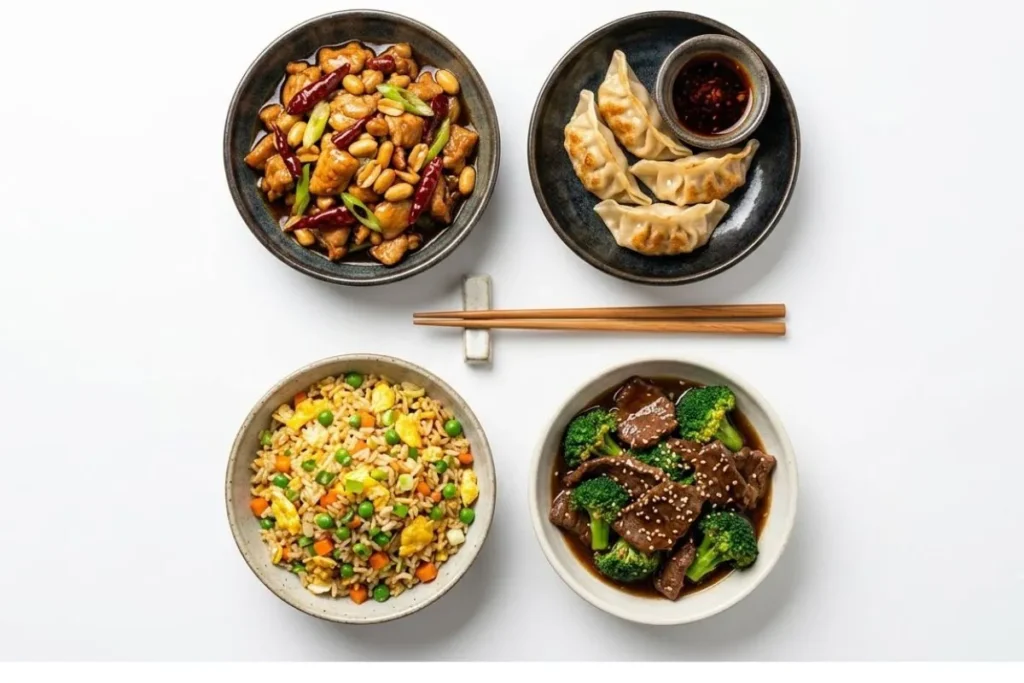
These are the ones that earned a permanent spot in my rotation. Simple ingredients, big flavor, and every single one beats what I used to order.
- Classic Beef and Broccoli — Velvety beef, crisp broccoli, garlic-soy glaze.
- Kung Pao Chicken — Spicy, peanutty, a little tangy. Better than any restaurant version I’ve had.
- Vegetable Fried Rice — The ultimate leftover-rice rescue dish.
- Sweet and Sour Pork — Crispy pork, pineapple, and a sauce that actually tastes fresh.
- Homemade Orange Chicken —Crispy chicken bites in a bright, sticky citrus glaze. If crispy chicken is your thing, don’t miss these homemade Chinese chicken fingers too — another family favorite worth trying.
- Garlic Green Beans — A five-minute side dish that disappears fast.
- Mongolian Beef — Sweet, savory, and done faster than delivery.
- Egg Drop Soup — Two ingredients away from restaurant quality: good broth and patience.
- Chicken Chow Mein — Chewy noodles, crunchy veggies, silky sauce.
- Homemade Dumplings (Potstickers) — Freezer-friendly and endlessly customizable.
- Mapo Tofu — Bold, spicy, and shockingly quick to pull together.
- Honey Walnut Shrimp — A “restaurant-only” dish that’s easier at home than you’d think.
- General Tso’s Chicken — Crispy, sweet, spicy — the takeout classic, upgraded.
- Vegetable Lo Mein — A great blank canvas for whatever’s in your fridge.
- Hot and Sour Soup — Warming, tangy, and surprisingly simple.
- Char Siu (Chinese BBQ Pork) — Sticky, smoky, incredible in fried rice the next day.
- Scallion Pancakes — Flaky, crispy, and dangerously addictive.
Every one of these started as a messy first attempt in my kitchen. The difference between “okay” and “better than the restaurant” almost always came down to writing down what worked and adjusting the next time — which loops right back to why keeping your homemade Chinese food recipes recorded properly matters so much.
How I Keep My Homemade Chinese Food Recipes From Getting Lost
I mentioned this earlier, but it’s worth saying again because it’s genuinely the difference between cooking these dishes once and cooking them for years.
After losing that orange chicken recipe for the second time, I picked up a Blank Recipe Book to Write in Your Own Recipes — a hardcover personal recipe organizer with full pages for each recipe, room for 140 of them total. I use it to jot down every homemade Chinese food recipe the moment I get it right: exact soy sauce ratios, how long I marinated the chicken, what I’d change next time.
It sits on my counter now, a little stained with soy sauce and cornstarch, which honestly feels like proof it’s being used the way it’s supposed to be. If you’re serious about building a real collection of homemade Chinese food recipes instead of losing them in your camera roll, grabbing a dedicated recipe journal like this one is worth doing before you start cooking through this list — future you will be grateful.
A Few Ways People Use This In Real Life

A friend of mine started her own version of this after her mom passed down a few family recipes on loose paper. She copied them into a proper recipe book alongside the homemade Chinese food recipes she was learning on her own, and now it’s become something her kids ask to flip through.
Another one I know keeps hers in the kitchen drawer specifically for weeknight homemade Chinese food recipes — nothing fancy, just her go-to stir-fry ratios and sauce combos written out so she’s not Googling the same thing for the hundredth time.
That’s really the point. It’s not about being a “real” cook. It’s about not losing the good stuff once you find it.
Before You Start Cooking
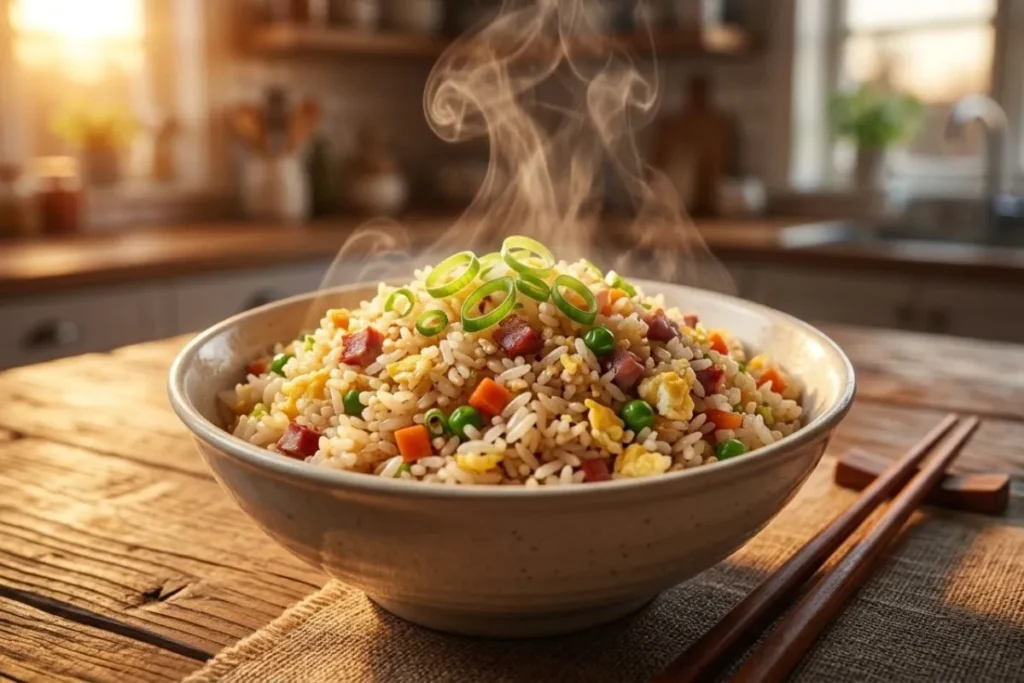
If there’s one thing I’d tell someone just getting into homemade Chinese food recipes, it’s this: don’t try to memorize everything or trust that you’ll remember the tweaks later. You won’t — I never did. Write it down as you go, keep your favorite homemade Chinese food recipes in one place, and build from there.
If you want a simple way to start that collection, this is the recipe journal I still use every week — it’s not complicated, it just works, and it turns a list of recipes into something that actually feels like yours.
Want to keep things a little lighter without giving up the flavors you love? Check out these 17 Healthy Chinese Recipes that are easy, satisfying, and perfect for homemade dinners.
Frequently Asked Questions
Are homemade Chinese food recipes healthier than restaurant Chinese food?
Generally, yes. Restaurant versions often use more oil, sugar, and sodium than needed for flavor and shelf life. When you cook homemade Chinese food recipes yourself, you control every ingredient.
Do I need special equipment to make Chinese food at home?
Not really. A regular skillet works fine, though a wok helps with high-heat stir-frying. Most homemade Chinese food recipes only need basic pantry staples like soy sauce, garlic, ginger, and cornstarch.
What’s the easiest homemade Chinese food recipe for beginners?
Vegetable fried rice or garlic green beans are great starting points. Both come together in under 15 minutes and teach you the core stir-fry technique used in most other homemade Chinese food recipes.
How do I keep track of all my recipes once I start experimenting?
This trips up a lot of home cooks. Writing your homemade Chinese food recipes into a dedicated recipe journal, rather than scattered notes or screenshots, makes it far easier to repeat and refine your favorites over time.
Can I meal prep with homemade Chinese food recipes?
Absolutely. Dishes like fried rice, mapo tofu, and char siu store and reheat well, making them ideal for batch cooking homemade Chinese food recipes ahead of a busy week.
Quick note: some links in this post, including the recipe journal I mentioned, are affiliate links. That means if you buy through them, I might earn a small commission — at no extra cost to you. I only share things I actually use in my own kitchen, and this recipe book genuinely lives on my counter, so I figured it was worth passing along

19 Chinese Noodle Recipes So Delicious You’ll Never Buy Instant Noodles Again
It’s 9 PM. You just got home from work. Your stomach is growling, and there’s…

17 Healthy Chinese Recipes That Taste Better Than Takeout
I used to think “healthy” and “Chinese takeout” couldn’t exist in the same sentence —…

17 Homemade Chinese Food Recipes Better Than Your Favorite Restaurant
I still remember the night I gave up on takeout menus for good and started…

23 Homemade Chinese Chicken Fingers Recipes You’ll Make Again and Again
I still remember the first time I tried making Chinese-style chicken fingers at home. I…

10 Genius Small Space Decor Ideas That Made My Tiny Apartment Feel 2X Bigger”
I still remember the day I moved into my 450-square-foot apartment. I stood in the…

31 At-Home Date Night Ideas for Married Couples to Rekindle the Romance
There’s a specific kind of quiet that happens in a marriage around year five or…