

Table of Contents
It’s 11:47 PM and you’re still staring at the ceiling.
Tomorrow’s meeting is in 9 hours. Your inbox has 47 unread emails. And somewhere between the school pickup, the client call that ran 20 minutes over, and the laundry pile that’s now its own ecosystem, you forgot to actually breathe today.
Sound familiar? If you’re nodding right now, you’re not broken. You’re just running on a system that was never designed for this much pressure. And here’s the thing nobody tells you — a real stress management routine isn’t about quitting your job, moving to a cabin in the woods, or finding three hours a day you simply don’t have.
It’s about small, repeatable things that fit into the life you already have. That’s exactly what we’re going to build today.

Why Most “Stress Management” Advice Doesn’t Work for Busy Professionals
Let’s be honest for a second. You’ve probably already tried the generic advice. “Just meditate for 20 minutes.” “Take a walk in nature.” “Practice gratitude journaling every morning.” Cute in theory. Useless when you’re juggling back-to-back Zoom calls from 9 to 6 and barely have time to eat lunch standing up.
The problem isn’t that you lack willpower. The problem is that most advice is written by people who don’t actually have a 9-to-6 grind eating their day alive. A real stress management routine has to work with your schedule, not against it.
And here’s the part that really stings — chronic, unmanaged stress doesn’t just make you feel tired. It quietly wrecks your sleep, your focus, your patience with the people you love, and eventually, your health. You feel foggy at work. You snap at your partner over nothing. You scroll your phone at midnight instead of sleeping, because your brain simply won’t switch off.
If this is you, you don’t need another 5 AM miracle morning routine. You need a stress management routine that’s realistic, sustainable, and actually fits between meetings.
What a Real Stress-Busting Daily Routine Looks Like
A stress management routine isn’t one big dramatic change. It’s a handful of small anchors throughout your day that signal to your nervous system, “okay, we can relax now.” Think of it less like a strict schedule and more like a toolkit you reach for at different points in your day.
The best stress management routine has three parts: something for your environment (so your space helps you instead of stressing you out more), something for your mind (so the mental noise has somewhere to go), and something for your body’s wind-down at night (because if you’re not sleeping well, nothing else works either).
Let’s break those down one at a time, because each piece matters more than people realize.
Part 1: Fix Your Environment First
Most people try to manage stress purely in their head, and that’s exactly why it doesn’t stick. Your environment is talking to your nervous system all day long, whether you notice it or not. A cluttered, harsh-smelling, fluorescent-lit room is quietly telling your brain to stay alert and tense.
This is where something as simple as a diffuser running in the background genuinely changes the texture of your day. I started running an essential oil diffuser at my desk during work hours, and honestly, I underestimated how much of a difference it made. It’s not magic — it’s just that a calming scent in the air gives your brain a subtle, constant cue that this space is safe, not stressful.
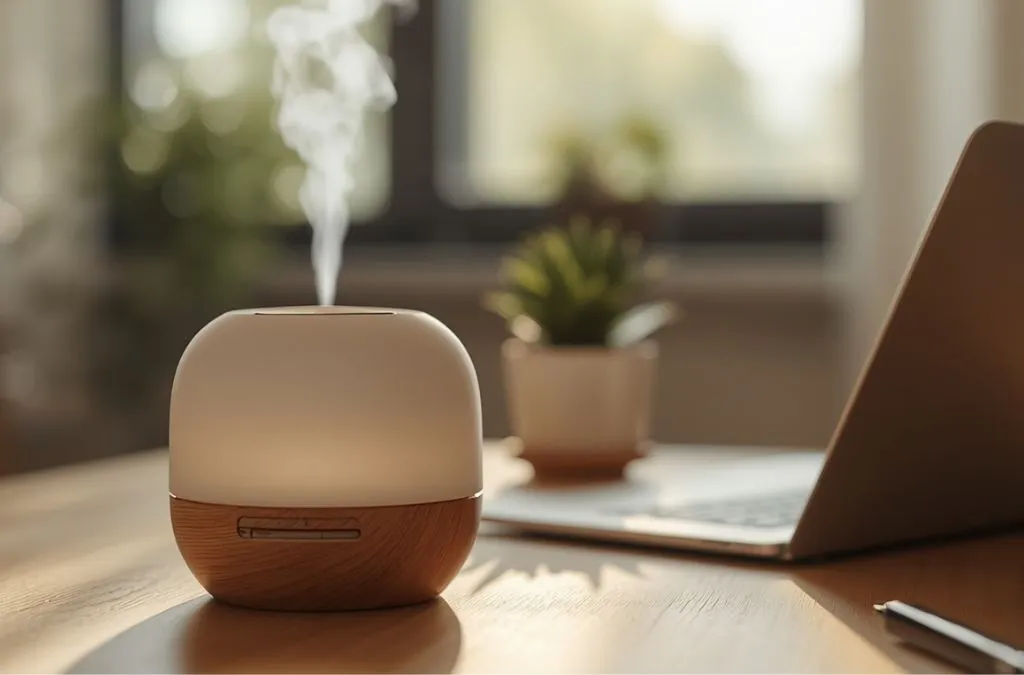
The ASAKUKI 500ml Premium Essential Oil Diffuser is one of those products that does its job quietly in the background while you work. You set it up once in the morning, and it runs for hours, misting the room with whatever scent helps you focus or unwind — lavender for calm, peppermint for focus, whatever your day calls for. It’s not a grand gesture. It’s a tiny environmental shift that compounds over a full workday.
If your home office or bedroom currently smells like nothing in particular, or worse, like stress and stale coffee, this is genuinely one of the easiest wins you can add to your day. ASAKUKI 500ml Essential Oil Diffuser if you want to see the one I’m talking about — it’s worth a look, especially if you’re someone who works from the same room all day.
Part 2: Give Your Mind Somewhere to Put the Noise
Here’s something most stress management routine guides skip entirely — your brain needs an outlet for the mental chatter, or it’ll find one for you, usually at 1 AM while you’re trying to sleep.
Journaling sounds like one of those things people recommend without really explaining why it works. But there’s a real reason it helps: when you write down the swirl of thoughts in your head, your brain stops trying to “hold onto” them for you. It’s like finally setting down bags you didn’t realize you were carrying.

The problem is most journals just say “write your thoughts” and leave you staring at a blank page, which is its own kind of stressful. That’s why a guided journal works so much better for people who are stressed and busy — you don’t have to think about what to write, you just follow the prompt.
“And if you need something even faster than journaling — like, you’re mid-meeting and your chest is tight right now — there’s a strange little trick worth knowing too. I actually wrote a whole piece on why sticking out your tongue for 40 seconds may help reduce stress, and it sounds silly until you try it. It’s the kind of thing you can do at your desk in under a minute when journaling just isn’t an option in the moment.”
The Journal Lab’s 99 Ways to Unwind Destress Journal is built exactly for this. It’s not a diary where you’re supposed to write three paragraphs about your feelings every night. It’s 99 specific, guided prompts and exercises designed to pull you out of stress mode in just a few minutes. Some nights you’ll do a full prompt. Other nights you’ll do one line. Both count.
What I like about this approach is that it removes the decision fatigue. After a long day of decisions, the last thing you want is to decide how to journal. You just open it, follow the prompt, and let your brain finally exhale. The Journal Lab 99 Ways to Unwind Destress Journal is worth checking out if your evenings usually end with your mind still racing.
Part 3: Actually Let Your Body Sleep
This is the piece people underestimate the most. You can do everything right all day — diffuser running, journal filled in, deep breaths between meetings — and still wake up exhausted if your sleep itself is shallow and broken.
A huge, sneaky cause of bad sleep is light. Streetlights through the blinds. A phone charging on the nightstand with its little blinking light. The hallway light your partner leaves on. Your brain registers all of it, even with your eyes closed, and it keeps you in a lighter, more restless stage of sleep.
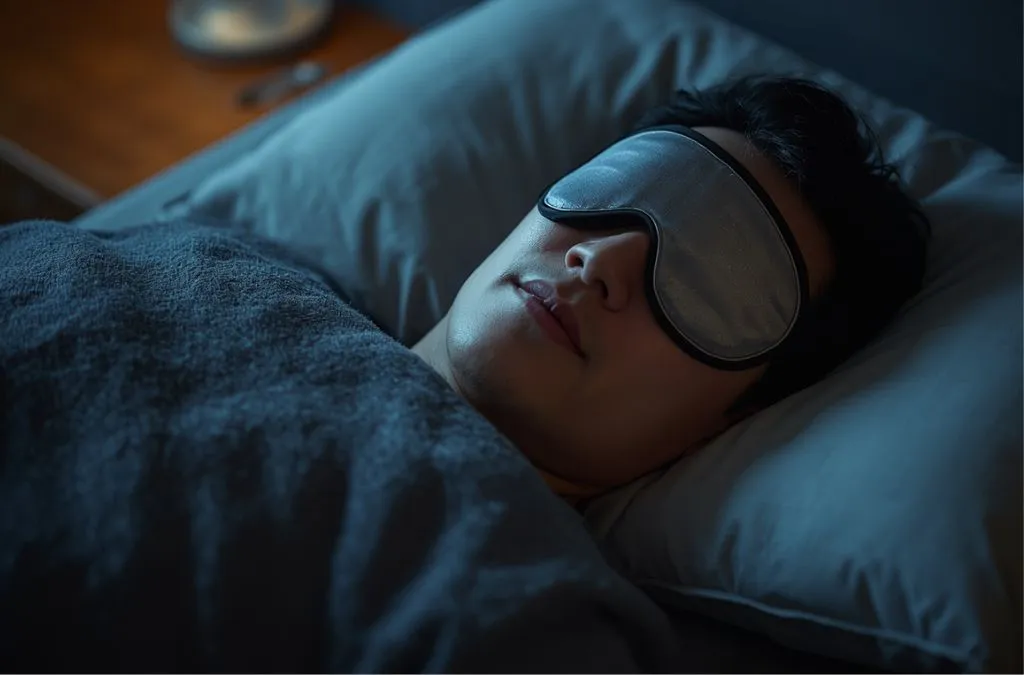
This is why a genuinely good sleep mask isn’t a gimmick — it’s one of the highest-leverage tools you can add to your evenings, because deep sleep is when your nervous system actually resets. Without that reset, you’re trying to manage stress on a half-charged battery every single day.
The Manta Sleep Mask solves the one thing most sleep masks get wrong — eye pressure. Most masks press uncomfortably on your eyes, especially if you sleep on your side, which honestly defeats the whole purpose. The Manta uses adjustable eye cups instead of one flat piece of fabric, so it blocks 100% of light without squashing your eyelashes or pressing into your eye socket. People who’ve tried a dozen sleep masks and given up tend to be the ones who are most surprised by this one.
If your nights feel more like tossing and half-sleeping than actual rest, this is the kind of small change that makes a real difference within the first few nights. Manta Sleep Mask is worth a look if deep, uninterrupted sleep has been missing from your stress management routine.
Putting It All Together: A Realistic Daily Stress Management Routine
Here’s what this actually looks like stitched into a normal workday, no extra hour required.
Morning (2 minutes):
Switch on your diffuser before you open your laptop. Let the scent settle in while you check your first emails. This sets the tone for the room, not just for you.
Midday (3 minutes):
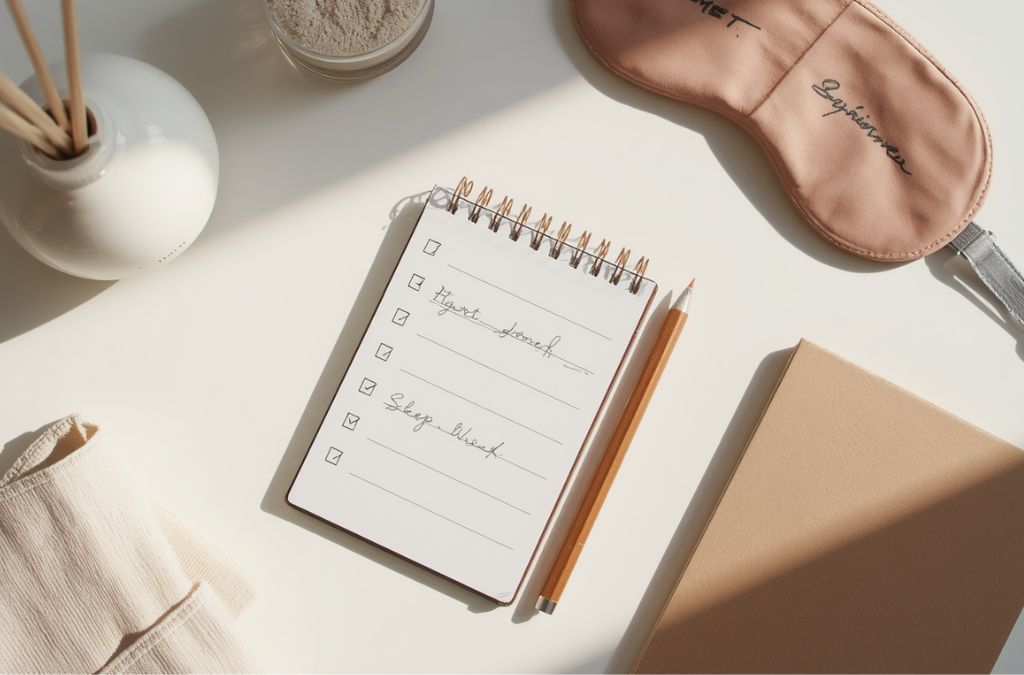
When you feel that familiar tightness building — tense shoulders, shallow breathing, a meeting that ran long — open your journal and do one quick prompt. You don’t need a clean slate of free time. You need three minutes between calls.
Evening (5 minutes):
Before bed, do one more journal prompt to clear your head, then put on your sleep mask the moment you lie down, before your brain has a chance to start scrolling or spiraling.
That’s the entire routine. No 5 AM wake-up call. No hour-long yoga session you’ll skip after week two. Just three small, physical anchors that quietly do the heavy lifting your willpower can’t do alone.
The Real Reason This Kind of Routine Sticks
Most people fail at stress management not because they don’t know what to do, but because what they’re told to do requires too much time, too much motivation, or too much change all at once. A sustainable stress management routine works because it lowers the bar to almost nothing. You’re not trying to overhaul your personality. You’re adding a few small, physical tools that do part of the work for you, automatically, every single day.
Give it two weeks. Not because two weeks is magic, but because that’s about how long it takes for these small anchors to stop feeling like “one more thing to do” and start feeling like just… part of your day. That’s when you’ll notice you’re snapping less, sleeping deeper, and actually present during dinner instead of mentally replaying your inbox.
“Why sticking out your tongue for 40 seconds may help reduce stress”
Frequently Asked Questions
What is the best daily stress management routine for busy professionals?
The best approach combines small environmental, mental, and physical anchors throughout the day rather than one long session. A calming scent during work hours, a quick guided journal prompt midday, and a proper wind-down before sleep cover all three angles without needing extra hours in your schedule.
How long does it take for this kind of routine to actually work?
Most people start noticing small shifts within the first week, but a stress management routine usually needs about two to three weeks of consistency before it feels automatic rather than like an extra task on your to-do list.
Can this kind of routine help with poor sleep too?
Yes, and honestly, sleep is often the missing piece. A stress management routine that ignores sleep quality is only solving half the problem, since poor sleep keeps your nervous system in a constant low-grade stress state the next day.
Do I need a lot of time to build one?
Not at all. A realistic stress management routine for a busy professional can take less than 10 minutes total across the whole day — a couple of minutes in the morning, a few minutes midday, and a short wind-down at night.
What’s the easiest first step to start?
Pick just one anchor and start there. Many people find that beginning with their environment, like running a diffuser during work hours, is the easiest because it requires zero willpower or extra time once it’s set up.
One more honest note: I’m not a doctor or a licensed therapist, and nothing in this post is medical advice. This routine is just what’s genuinely helped me and others manage everyday work stress — it’s not a treatment for anxiety, depression, or any other health condition. If stress is seriously affecting your sleep, work, relationships, or mental health, please talk to a doctor or mental health professional. You deserve real support, not just a blog post.
A quick honest note: this post contains an affiliate link, which means if you decide to buy through it, I may earn a small commission at no extra cost to you. I only recommend products I’ve genuinely looked into and would consider using myself — your trust matters more to me than a quick sale.

19 Chinese Noodle Recipes So Delicious You’ll Never Buy Instant Noodles Again
It’s 9 PM. You just got home from work. Your stomach is growling, and there’s…

17 Healthy Chinese Recipes That Taste Better Than Takeout
I used to think “healthy” and “Chinese takeout” couldn’t exist in the same sentence —…

17 Homemade Chinese Food Recipes Better Than Your Favorite Restaurant
I still remember the night I gave up on takeout menus for good and started…

23 Homemade Chinese Chicken Fingers Recipes You’ll Make Again and Again
I still remember the first time I tried making Chinese-style chicken fingers at home. I…

10 Genius Small Space Decor Ideas That Made My Tiny Apartment Feel 2X Bigger”
I still remember the day I moved into my 450-square-foot apartment. I stood in the…

31 At-Home Date Night Ideas for Married Couples to Rekindle the Romance
There’s a specific kind of quiet that happens in a marriage around year five or…