

Real-life Korean conversations are something I wish someone had explained to me sooner. I still remember the first time I tried to order coffee in Korean. I had memorized “Annyeonghaseyo,” I knew my numbers, I could even introduce myself with decent confidence. And then the barista asked me something completely normal, something that wasn’t in any of my textbook dialogues, and I just… froze.
That moment is exactly why the idea of learning real, everyday Korean has been blowing up among language learners lately. If you’ve been struggling to bridge that gap and you’re not totally sure where to start, you’re in the right place. By the end of this post, you’ll understand the concept, why it actually matters for getting fluent faster, and which resource has been quietly becoming my go-to recommendation for anyone serious about real spoken Korean.
…it finally clicked — kimbap. If you want the full breakdown of Korean dish similar to sushi, you’re in the right place.
Table of Contents
What “Real-Life Korean” Actually Means
Let’s clear this up first, because the term gets thrown around loosely. Real-life Korean isn’t some fancy app or gimmick. It refers to learning Korean the way it’s actually spoken in real life, not the polished, textbook version that sounds like nobody you’ll ever meet on the street.
Most beginner courses teach you “correct” Korean. Grammatically clean, formal, safe. But real Koreans don’t talk like that with their friends, their coworkers, or even strangers at a convenience store. They drop syllables, use slang, mix in casual speech patterns, and react in ways no textbook prepares you for. This real-life approach is basically the bridge between “I studied Korean for a year” and “I can actually understand what’s happening in a conversation.”
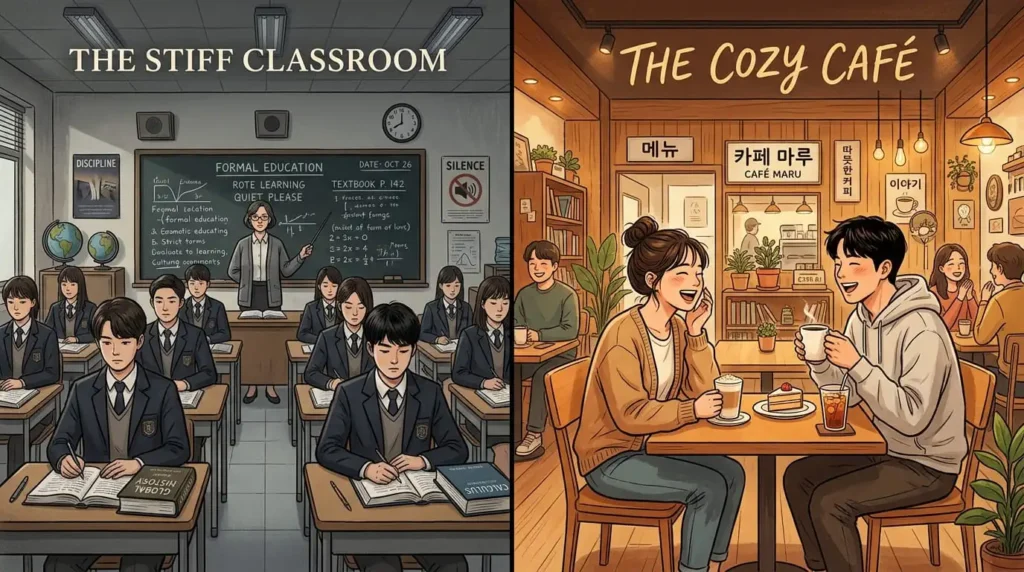
Why Most Beginners Get Stuck With Textbook-Only Korean
Here’s the problem nobody tells you when you start learning Korean. You can ace your vocabulary quizzes, memorize hundreds of words, even understand K-drama subtitles pretty well. And then you land in Seoul, or you’re on a video call with a Korean friend, and suddenly none of it clicks the way it should.
It’s frustrating, honestly. You start questioning whether you’re just bad at languages. You’re not. The real issue is that most study materials teach Korean in isolation, sentence by sentence, with zero context for tone, pacing, or the natural back-and-forth of an actual conversation. That gap is where so many learners quietly give up. They get discouraged, the textbook gathers dust, and the dream of speaking confidently fades into “maybe someday.”
This is exactly why a real-life conversational approach matters so much. It’s not about knowing more words. It’s about knowing how those words actually get used between two real people.
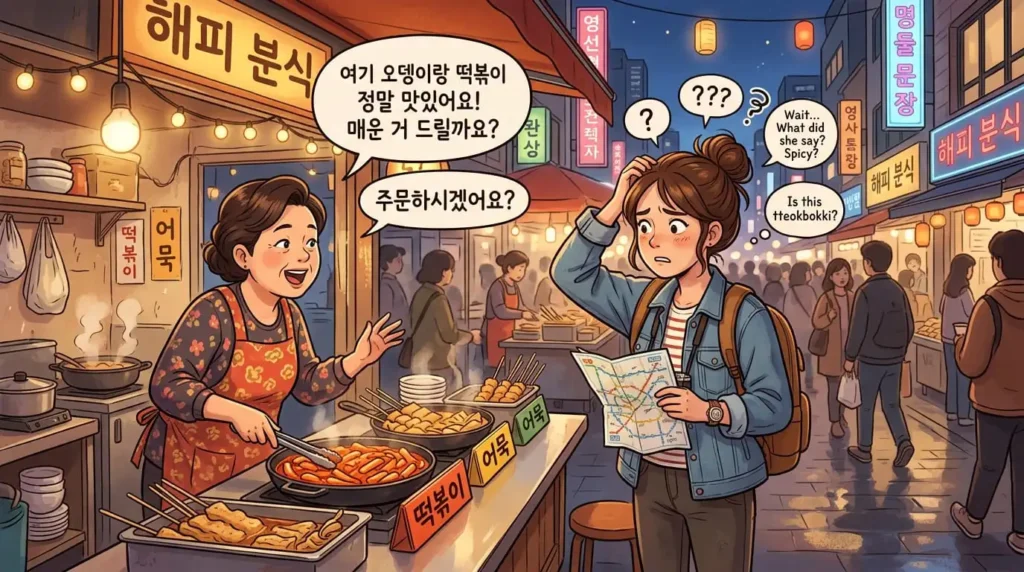
So What’s the Solution
This is where real-life Korean conversations actually start making sense — thanks to a book that genuinely changed how I approach learning Korean…
I didn’t go in expecting much, to be honest. I’d already tried a handful of apps and grammar books that promised “real conversations” and delivered the same stiff, unnatural dialogue I’d seen a hundred times. But this one was different from the first chapter. It’s built around actual situations, the kind of stuff that happens when you’re traveling, meeting people, ordering food, texting a friend, dealing with small talk that doesn’t follow a script.
What stood out to me is that it doesn’t just throw vocabulary at you. It shows you the rhythm of real Korean conversation, how people actually respond, hesitate, agree, disagree, and joke around. Reading through it felt less like studying and more like eavesdropping on real people talking, which honestly might be the best way to learn any language.
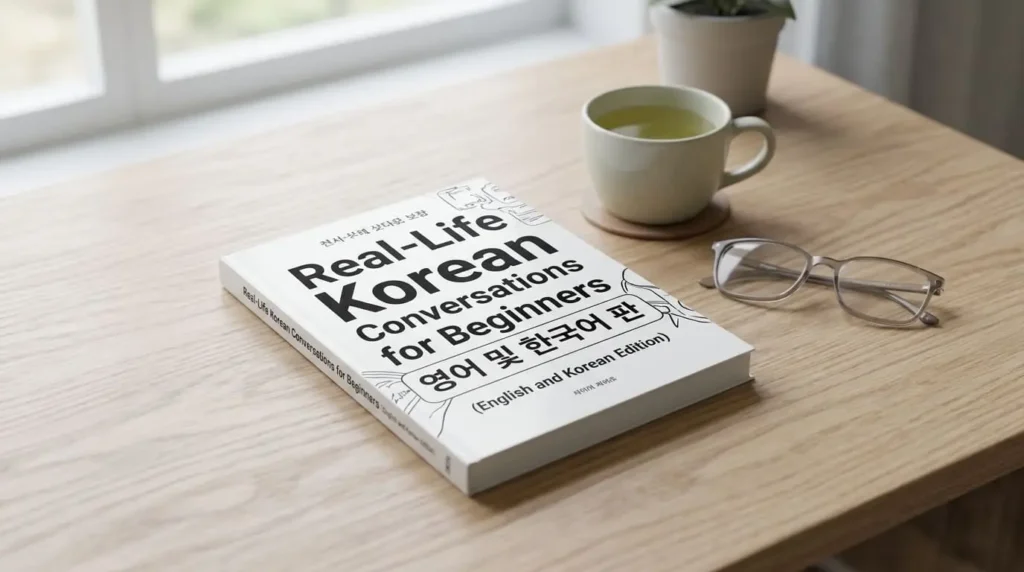
👉 If you want to actually understand how Koreans talk in everyday situations instead of guessing, this is the book I’d point you toward — check it out here
Real-Life Korean Benefits That Actually Matter
I’m not going to list a bunch of generic perks here. Let me walk you through what genuinely made real-life Korean conversations click for me.
It teaches context, not just vocabulary. Every dialogue comes with the kind of situational backstory that helps you understand why someone says something a certain way. That’s the heart of learning real, spoken Korean — context is everything.
The dual-language format actually works. Having English and Korean side by side means you’re not constantly flipping to a dictionary or guessing meaning from context clues that might be wrong. You see it, you understand it, you move on.
It’s beginner-friendly without being babyish. A lot of “beginner” Korean books talk down to you with overly simple, useless phrases. This one assumes you’re an adult who wants real tools, not just “hello, how are you” on repeat.
It builds listening intuition. Once you’ve gone through enough of these realistic exchanges, you start predicting how conversations flow. That’s the moment things click.
It’s practical for actual situations. Restaurants, taxis, friend group chats, small talk with coworkers — this isn’t theoretical Korean. It’s stuff you’ll use the week you land in Korea, or honestly, the week you start talking to Korean friends online.
Real Examples of How This Plays Out
Let’s see what real-life Korean conversations actually sound like. Say you’re at a street food stall in Myeongdong.
Or imagine you’re texting a Korean friend and they send something short and slangy. If your only exposure has been formal grammar drills, you’ll be totally lost. But if you’ve trained with this kind of real-life material, you’ll recognize the pattern immediately because you’ve seen it before, in context, the way it’s really used.

I’ve had moments where a phrase I picked up from this book came up almost word for word in a real conversation. That’s not a coincidence. That’s what happens when the material is built around how people genuinely talk instead of how a textbook committee thinks they should talk.
Why Real-Life Korean Matters More in 2026
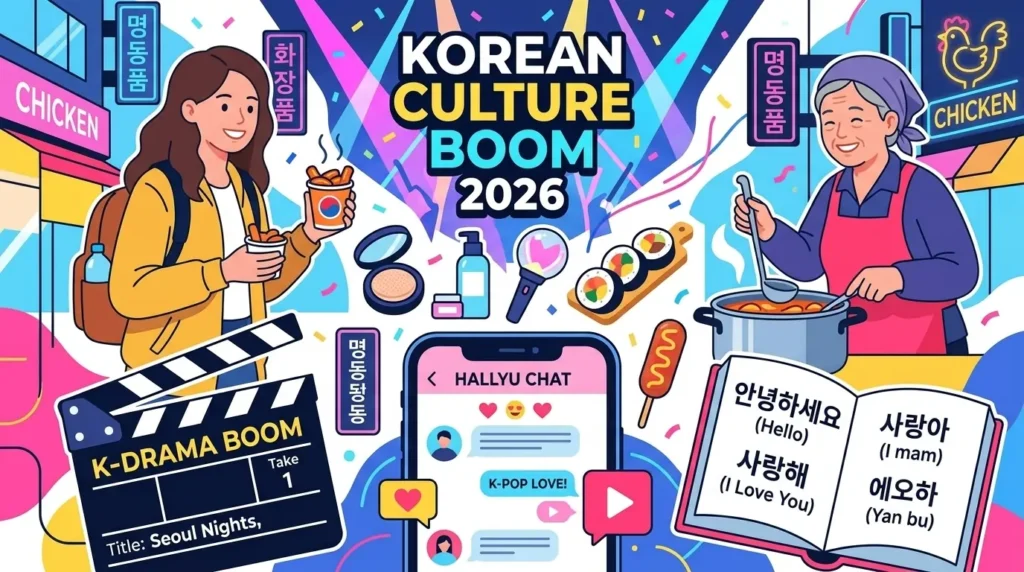
Korean content, K-pop, K-dramas, Korean travel, it’s not slowing down anytime soon. More people than ever are trying to learn Korean, and more people than ever are getting frustrated by the gap between “textbook Korean” and “real Korean.” Real-life Korean conversations are gaining traction precisely because learners are tired of feeling unprepared…
If you’re serious about actually being able to hold a conversation, not just pass a quiz, this is the shift you need to make. And honestly, starting with the right material saves you months, maybe years, of frustration.
👉 Curious what real Korean conversations actually sound like instead of textbook Korean? Take a look at the book here
Honest Thoughts on Real-Life Korean Learning Before You Go
I’m not going to pretend this book is magic. You still have to put in the work, practice out loud, and actually use what you learn. But if you’re looking for a resource that respects your time and gives you real, usable Korean instead of recycled textbook phrases, this has earned its spot on my shelf and in my recommendations.
If you’ve been stuck in that frustrating in-between stage…mastering real-life Korean conversations might be exactly the shift you need.
…check out our dedicated post on why kimbap is called a Korean dish similar to sushi.
Frequently Asked Questions
What does “real-life Korean conversations” mean exactly?
It refers to learning Korean based on how it’s genuinely spoken in everyday life, rather than the formal, simplified version found in most beginner textbooks.
Is this real-life method good for complete beginners?
Yes. It works especially well for beginners because it builds natural listening and speaking habits early, instead of having to “unlearn” overly formal patterns later.
How is this different from regular textbook learning?
Traditional textbooks focus on grammar rules in isolation. This approach focuses on context, tone, and natural conversation flow, which is what you actually need to understand real people.
Can I learn real-life Korean without living in Korea?
Definitely. That’s the whole point of using a resource like Real-Life Korean Conversations for Beginners. It brings realistic conversations to you, wherever you’re learning from.
Why are more learners focusing on real-life Korean in 2026?
With the boom in Korean content and travel, more learners are realizing that textbook Korean alone isn’t enough. People want practical, real-world skills they can actually use in real situations.
Quick heads up: some links in this post are affiliate links, which means if you decide to buy through them, I might earn a small commission at no extra cost to you. I only recommend things I’d genuinely use myself, and this book is one of them.
.